Well-being is relational.
The Center for Integrative Relational Health
Beyond individual treatment. Beyond isolated intervention. Beyond Mental Health.
Something is missing from the way we've learned to care for people. We can feel it in our work: in the moments when our training runs out, and what the situation actually needs is something we were never quite taught. We were taught to assess individuals. To treat individuals. To design for individuals. But human beings don't struggle individually, and they don't heal that way either.
Well-being is relational. It lives in the quality of connection between people, in the health of communities, in the integrity of the systems that shape how we move through the world. We are a community of thinkers, caregivers, designers, and stewards who believe that the path toward a healthier culture doesn't run through a better protocol. It runs through a deeper understanding of how we belong to one another, and what becomes possible when we build from whole ground.
Ways of Knowing: An Integrative relational approach to understanding
Audiobook Available on all streaming platforms June 2026
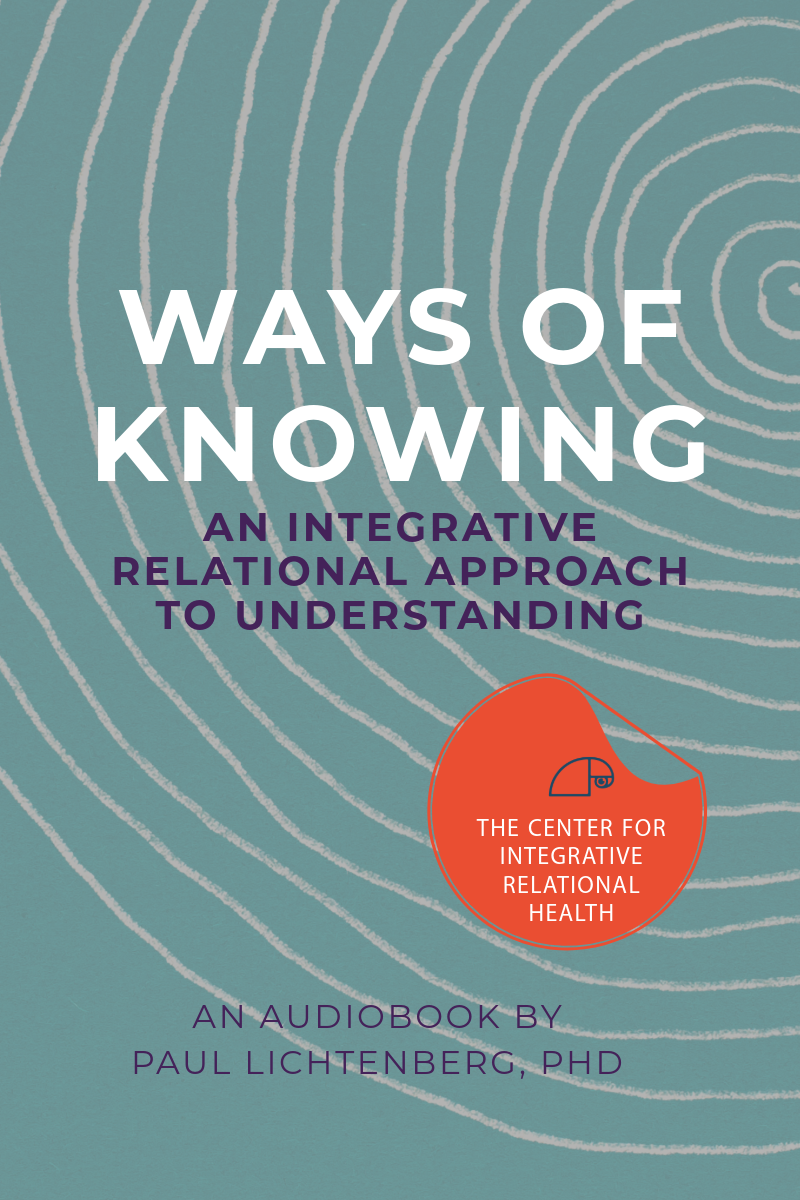
This is an invitation for helping professionals to examine not just their methods but also their assumptions about expertise, language, and whose knowledge counts and why.
Ways of Knowing is for all of us who sense that, somewhere beneath our expertise, something important is still missing.
Available on all major streaming platforms.
What does it mean to tend to human beings well?

Everything we develop at the Center for Integrative Relational Health is organized within a unifying body of knowledge: the Integrative Relational Health framework. Resting on three foundational dimensions - Being, Becoming, and Belonging - the IRH framework describes what genuine relational practice requires of every practitioner, designer, and system, simultaneously and without end.
These three dimensions find their expression in three distinct frameworks, each addressing a different scale of the same fundamental question: what does it mean to tend to human beings well?
Integrative Relational Health is a framework for human Well-being at every scale.
-
The encounters of care. How practitioners across care-centered professions show up in the living relational fields they inhabit with the people they serve.
Integrative Relational Practice moves beyond the expert-delivery model toward a different understanding of what helping requires: not the application of technique to human problems, but the ongoing development of the practitioner as a whole human being whose quality of presence, not just whose skill, determines what becomes possible in every encounter.
At its heart is a framework for relational energy that describes how genuine helping relationships form, open, reframe, collaborate, and expand beyond their formal boundaries.
The relationship is not the vehicle for the medicine. The relationship is the medicine.
-
The artifacts of care. How the people who build programs, policies, and institutions think about well-being and remain accountable to the communities it will shape.
Integrative Relational Design begins where human-centered design leaves off. It recognizes that the designer is not outside the relational field they are designing within: they are part of it, shaped by it, and accountable to it. And it insists that what gets built is not a delivered solution but a living field that will act in the world on behalf of people who were never in the room when it was made.
Design is how we build worlds for people we haven't yet met. It asks for a different kind of accountability.
-
The conditions for care. How systems, agencies, and institutions create an environment for genuine human flourishing.
Integrative Relational Wellbeing addresses the question of what it means for an institution to have a genuine culture, structure, decision-making, and community relationships that are themselves expressions of the values it claims to hold.
The conditions for well-being are not delivered to communities. They are built with them, tended collectively, and held in common.

What We Do
The Center for Integrative Relational Health works alongside practitioners, educators, designers, and institutions to understand well-being and the practice of care through an integrative relational lens.
As a center for thinking and collective inquiry, we steward the development of a growing body of knowledge about integrative relational practice across disciplines through research, learning, thought leadership, and community.
Where do you want to begin?