
Researching Authentic Relational Communities
Research Insight #4:
Language is a Tool for Collaborative Bridge Building
Emerging Question: How do we talk about our work in ways that build connection rather than create distance?
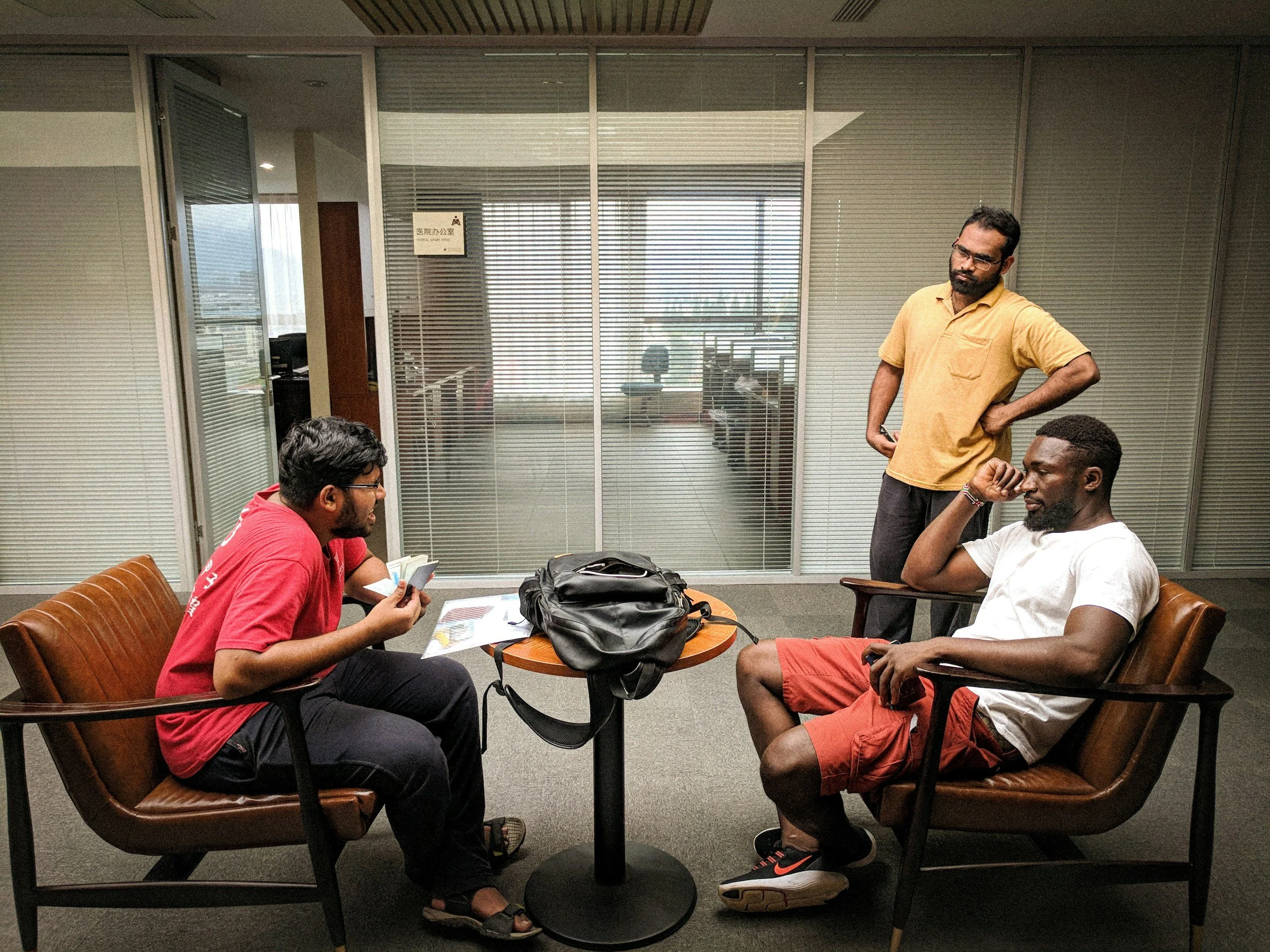
Learning to communicate across differences together as researchers from different disciplines and backgrounds challenged the cohort to learn new ways of communicating that went beyond just talking. They developed what they called relational literacy—the ability to pay attention not just to words, but to emotions, body language, and the unspoken dynamics in the room. This meant noticing when someone tensed up during a discussion, recognizing when silence held meaning, or sensing when the energy in a conversation shifted.
Rather than trying to smooth over disagreements or find quick compromises, they learned to work with productive tension. This doesn't mean creating conflict for its own sake, but rather creating enough safety and trust that people could actually disagree, push back on ideas, and explore difficult topics without the conversation falling apart. When someone felt secure enough to say "I don't think that's right" or "That approach wouldn't work in my community," it opened up space for deeper learning that wouldn't have happened if everyone just politely agreed. This productive tension embodies the Middle Way—holding space for discomfort and difference while remaining committed to connection.
The more they worked together in a relational research community, the more the fellows realized how much language shapes relationships. Words can build bridges or they can build walls. A term that feels neutral to one person might carry painful history for another. Academic jargon that sounds precise to a scholar might feel exclusionary to community members. Even well-intentioned words can miss the mark when they don't reflect how people actually see themselves or their experiences.
Through their ongoing work together, the fellows discovered that language in research communities functions much like it does in any other community—as a living system that either builds connection or creates distance. Their experience of returning again and again to questions about word choice revealed something important for researchers: language work is never finished. Just as community relationships require ongoing attention and care, research language needs continuous tending.
The fellows found that settling on definitions once and moving on actually missed the point. Instead, their practice of repeatedly asking—How do we talk about our research in ways that honor different perspectives? What words create connection versus distance? How do we work with the reality that the same term might mean different things to different people?—became a form of embodied research methodology itself.
This iterative approach to language generated a key insight: the process of negotiating meaning together is as valuable as any final definition. The conversations themselves became sites of knowledge creation, revealing assumptions, uncovering different ways of understanding the same phenomenon, and building the relational foundation necessary for collaborative inquiry.
Three concepts emerged as particularly crucial anchors through this process: Trust, Respect, and Boundaries. Rather than being abstract principles to define and apply, these became living practices that the fellows had to work out together in real time. Their experience suggested that researchers interested in embodied, relational approaches might need to approach key concepts not as fixed tools, but as ongoing collaborative practices that generate insight through the very process of being worked through in community.
Jaelle Faison (Educational Psychology PhD, Howard University) brought particular depth to understanding how these concepts operate within authentic relational communities. Her research focuses on addressing the impact of miseducation on generational traumas by using communication as a tool for re-education, aiming to cultivate self-efficacy and self-determination within the African diaspora. Jaelle's reflections illuminated the intricate relationship between trust, safety, and authenticity:

Jaelle Faison (IRH Fellow, Educational Psychology PhD, Howard University)
"This experience has reinforced and highlighted for me the necessary factors of trust and safety as they contribute to the level to which one feels they can be authentic. Trust and safety may be a matter of belief and/or reality."
The fellows' exploration of ostensibly basic concepts – Trust, Respect, and Boundaries – revealed precisely the contextual complexity IRH has long emphasized. Perhaps most clearly revealed in Jaelle's articulation that 'what constitutes trust for one person might feel like invasion of privacy to another' shows how relational concepts resist universal definition.
Jaelle's concept of loving curiosity—the empathetic behavioral analysis and observation of people in community spaces—offered a concrete methodology for approaching difference with openness rather than judgment. The cohort's exploration also revealed that authentic relational work requires developing fluency in multiple "languages"—not just verbal communication, but emotional, somatic, and cultural ways of knowing and being. They came to understand that translation itself is "an interpretive act" that offers freedom and inclusivity when approached with care.
As language opened pathways for connection across difference, fellows discovered that some forms of knowledge could be accessed most directly through creative expression—particularly when working with marginalized communities navigating trauma and seeking spaces of genuine belonging.